Mortgages for Self-Employed Borrowers in the US: Bank Statement and P&L Loans Explained
Self-employed workers can qualify for a mortgage using bank statement loans or P&L documentation instead of traditional W-2 income verification.
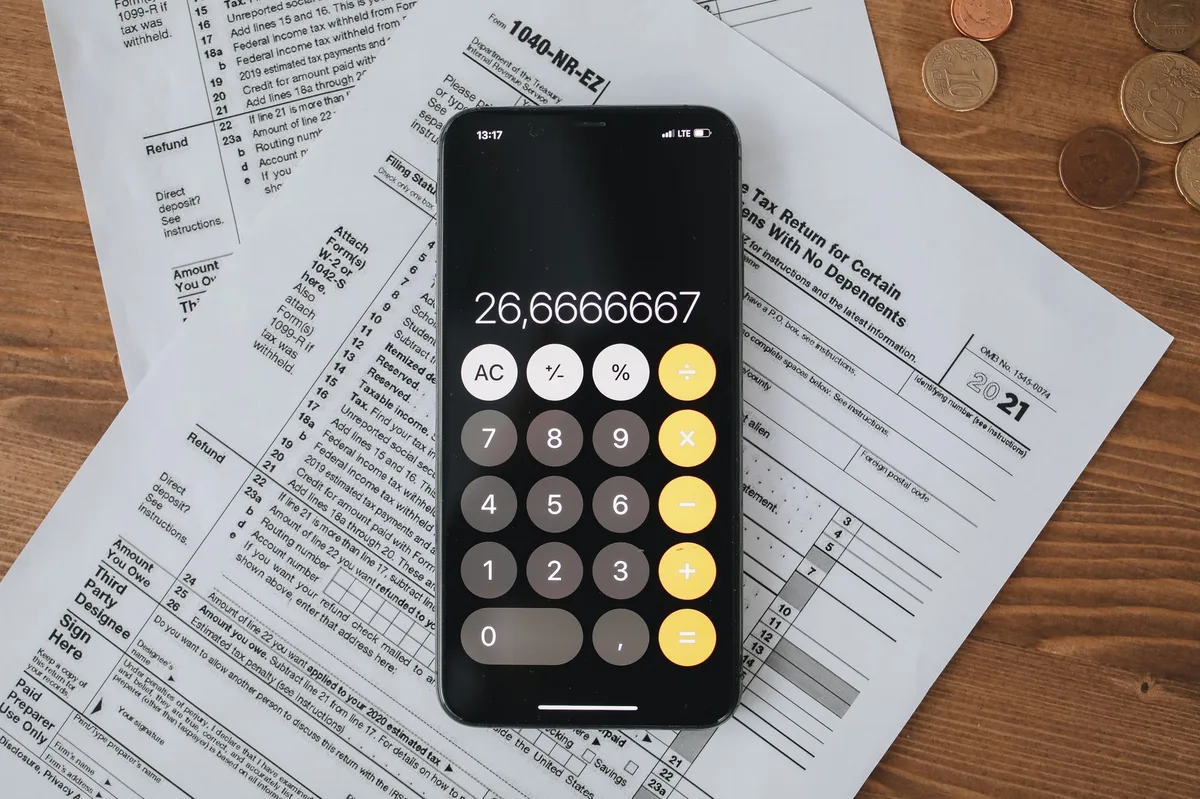
Pexels - Polina Tankilevitch · original
In this article
Key Takeaway
Self-employed borrowers, freelancers, and independent contractors can qualify for a mortgage in the US using bank statement loans or profit-and-loss (P&L) documentation instead of traditional W-2 income verification. Bank statement loans analyze 12 to 24 months of personal or business bank deposits to calculate income, while P&L loans rely on certified or reviewed financial statements prepared by a CPA or tax professional. Both options accommodate borrowers whose tax returns show lower adjusted gross income due to business write-offs, but they typically require higher down payments (10 to 20 percent) and carry slightly higher interest rates than conventional loans.
What Self-Employed Mortgage Programs Are
Traditional mortgage underwriting centers on W-2 wage earners whose income is straightforward to verify through pay stubs, employer letters, and tax returns. Self-employed borrowers, business owners, freelancers, and gig workers face a different challenge: their taxable income often appears lower on tax returns because legitimate business deductions (home office expenses, equipment depreciation, vehicle use, health insurance premiums) reduce adjusted gross income. A business owner earning $150,000 in revenue might show only $80,000 in taxable income after deductions, which standard underwriting interprets as lower qualifying income.
Bank statement loans and P&L loans are alternative documentation programs designed to capture the borrower’s true earning capacity rather than taxable income alone. These programs fall into two broad categories: some are offered as conventional or portfolio loans by specialized lenders, and others are classified as non-qualified mortgages (non-QM) because they do not meet all the Consumer Financial Protection Bureau’s Qualified Mortgage standards for income documentation (CFPB, 2026).
How Bank Statement Loans Work
A bank statement loan uses deposits in personal or business bank accounts to estimate gross income. Lenders request 12 to 24 months of consecutive bank statements and apply an expense ratio (typically 25 to 50 percent, depending on business type and lender policy) to account for operating costs. For example, if a borrower’s business account shows average monthly deposits of $10,000 over 24 months and the lender applies a 40 percent expense ratio, the qualifying income would be $6,000 per month ($10,000 minus $4,000 in estimated expenses), or $72,000 annually.
The lender reviews statements for consistency, large one-time deposits (which may be excluded), and patterns of cash flow. Self-employed borrowers can use personal account statements if business income flows through personal checking, or business account statements if they maintain separate accounts. Some lenders accept a combination of both when the borrower operates multiple businesses or income streams.
Bank statement loans typically require a minimum credit score of 620 to 680 (depending on the lender), a down payment of 10 to 20 percent, and reserves (liquid assets covering several months of mortgage payments). Interest rates run 0.25 to 1.00 percentage point higher than comparable conventional loans, reflecting the higher documentation risk.
How P&L Loans Work
Profit-and-loss loans rely on a CPA-prepared or CPA-reviewed financial statement instead of tax returns. The lender evaluates the borrower’s year-to-date or trailing 12-month P&L statement, which itemizes revenue, cost of goods sold, operating expenses, and net profit. The net profit figure, adjusted for non-recurring expenses or one-time events, becomes the qualifying income.
P&L loans require the financial statement to be prepared or reviewed by a licensed certified public accountant, and the lender may contact the CPA directly to verify the statement’s authenticity and methodology. Some programs accept a CPA letter certifying that the borrower has been self-employed for a minimum period (usually two years) and confirming the income calculation.
This approach works well for borrowers whose businesses are profitable on paper but show reduced taxable income due to accelerated depreciation, retirement plan contributions, or other above-the-line deductions. The P&L captures business health without the tax-minimization strategies that reduce adjusted gross income.
P&L loan requirements mirror bank statement loans: credit scores in the mid-600s or higher, down payments of 10 to 25 percent, reserves of three to six months, and interest rates slightly above conventional loan rates. Fannie Mae and Freddie Mac do not purchase most P&L or bank statement loans, so these mortgages are held in lender portfolios or sold to private investors, which explains the pricing premium.
Eligibility and Documentation
Both bank statement and P&L programs require the borrower to demonstrate a minimum period of self-employment, typically two years in the same line of work. Lenders verify business continuity through state business licenses, client contracts, invoices, or proof of business registration. Newer self-employed borrowers (those with less than two years of history) face greater difficulty qualifying unless they worked in the same industry as a W-2 employee before becoming self-employed, in which case some lenders will accept one year of self-employment history combined with prior W-2 experience.
Additional documentation often includes:
- A signed letter of explanation describing the nature of the business and income sources.
- Business licenses or professional credentials (for contractors, real estate agents, consultants).
- A year-to-date P&L statement even when using bank statements, to corroborate income trends.
- Personal and business tax returns for the most recent one or two years (reviewed for red flags such as declining revenue or tax liens, though not used as the primary income calculation).
- Proof of business ownership (articles of incorporation, partnership agreement, or DBA registration).
As foundational texts such as Principles of Finance explain, lenders assess both capacity to repay (income sufficiency) and willingness to repay (credit history), and alternative documentation programs apply the same debt-to-income ratio limits (typically 43 to 50 percent) as conventional loans.
When to Use These Programs
Bank statement and P&L loans suit self-employed borrowers whose business write-offs significantly reduce taxable income, making traditional underwriting unworkable. Common beneficiaries include independent contractors, real estate agents, small business owners, freelance professionals, and gig workers with consistent deposit patterns but variable tax returns.
Conventional conforming loans (those eligible for purchase by Fannie Mae or Freddie Mac) remain the better choice when the borrower’s tax returns reflect sufficient income to qualify, because conventional rates are lower and loan terms more favorable. Self-employed borrowers whose adjusted gross income already meets debt-to-income requirements should pursue conventional financing first.
Costs and Trade-Offs
The primary trade-off is cost. Bank statement and P&L loans carry higher interest rates (as of August 2026, expect rates 0.50 to 1.00 percentage point above conventional 30-year fixed rates) and often include higher origination fees. The larger down payment requirement (10 to 20 percent minimum, compared to 3 to 5 percent for some conventional programs) increases upfront cash needs. Private mortgage insurance is required when the down payment is less than 20 percent, and PMI premiums on alternative documentation loans can run higher than on conventional loans.
On the other hand, these programs provide access to homeownership for borrowers who would otherwise be locked out due to tax return limitations. For a self-employed borrower earning strong cash flow but showing minimal taxable income, the rate premium may be worthwhile compared to waiting years to restructure business finances or forego legitimate deductions.
Conclusion
Self-employed mortgage programs using bank statements or P&L documentation offer a practical path to homeownership for borrowers whose tax returns understate true income. Both options require solid credit, substantial down payments, and verifiable business history, and both come at a cost premium compared to conventional loans. Prospective borrowers should work with a lender experienced in alternative documentation programs to determine which approach best fits their business structure and financial profile. This information is educational and general in nature, not personalized financial or lending advice. Loan eligibility, rates, and terms vary by lender, business type, and individual circumstances. Consult a licensed mortgage professional and, when appropriate, a CPA or tax advisor to evaluate your specific situation before applying.
Sources
- Owning a Home (accessed )
- Fannie Mae Selling Guide (accessed )
- Mortgages (accessed )
- Principles of Finance (accessed )
Related articles
Jumbo Versus Conforming Loans in the US: Where the Limits Bite
Jumbo loans exceed Fannie Mae and Freddie Mac conforming limits. Learn where the threshold falls and how it affects rates, down payments, and qualification.

Buying a Home with Bad Credit in the US: FHA Limits and What Lenders Still Require
FHA loans accept credit scores as low as 500, but most lenders set minimums at 580 or higher. Compare FHA, conventional, and repair-first strategies.
FHA Loan vs. Conventional Mortgage: Which Is Better for Your Credit Score and Down Payment in the US
FHA loans accept lower credit scores and 3.5% down, but carry lifetime mortgage insurance. Conventional loans require higher credit but offer lower long-term costs.
