Construction Loans in Australia: Progress Payments and Interest During Build
Learn how construction loan progress payments work in Australia and how interest is charged during the building phase.
Pexels - D Goug · original
In this article
Key Takeaway
Construction loans in Australia are drawn down in stages as your build progresses, not as a single lump sum. You only pay interest on the amounts released to the builder at each stage (typically four to six progress payments). During construction, most lenders offer interest-only repayments on the drawn balance, converting to principal and interest once the build completes and you settle on the full loan amount.
What Is a Construction Loan
A construction loan is a specialist home loan designed to finance building a new house rather than buying an existing property. Unlike a standard home loan where the full amount is paid at settlement, a construction loan releases funds progressively to your builder as they complete defined stages of the build. According to ASIC MoneySmart, construction loans require additional documentation including council-approved plans, a fixed-price building contract, and builder insurance before approval (MoneySmart, 2026).
Lenders assess construction loans differently from purchase loans. They inspect the land value, review the builder’s credentials and contract, and verify that the total loan amount (land plus construction cost) stays within their loan-to-value ratio limits, typically 80 per cent without lenders mortgage insurance (LMI) or up to 95 per cent with LMI for eligible borrowers under schemes such as the Home Guarantee Scheme.
How Progress Payments Work
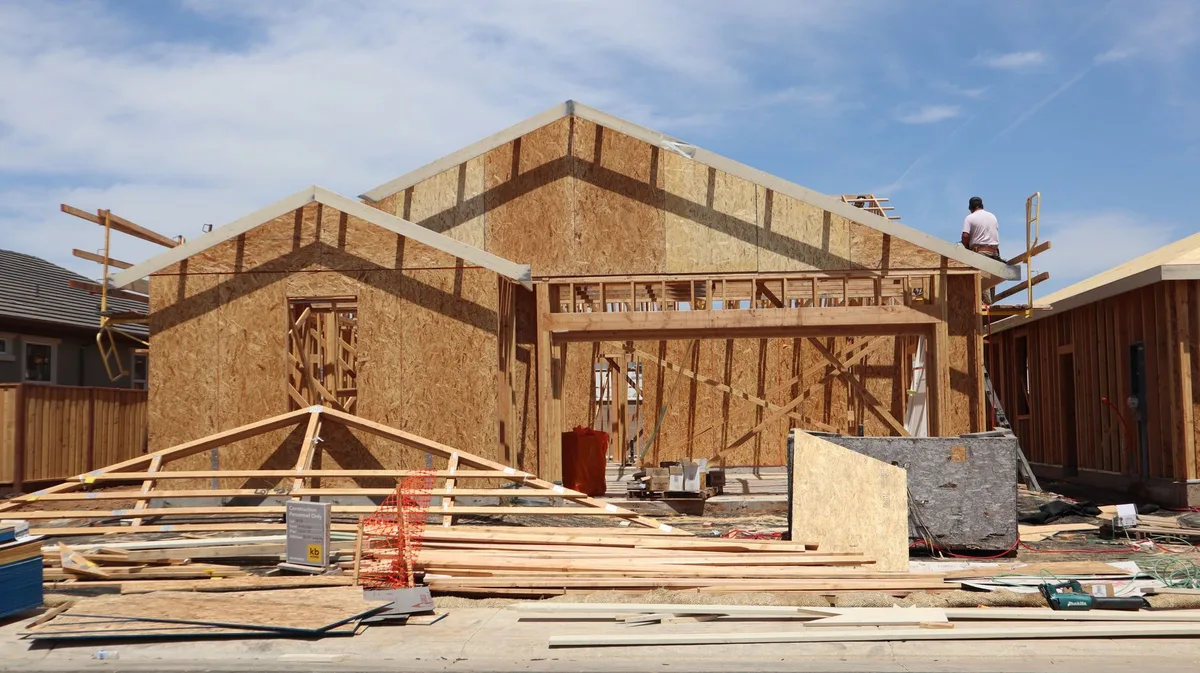
Progress payments (also called draw-downs) are released to the builder when specific construction milestones are reached. Most Australian lenders use a four-stage or five-stage payment structure. A common five-stage schedule includes: base stage (foundation and slab completed), frame stage (roof frame and wall frames erected), lock-up stage (external walls, windows and roof completed), fixing stage (internal fit-out, plumbing and electrical roughed in), and completion (final inspection passed and occupancy certificate issued).
The builder invoices the lender after each stage. The lender arranges an inspection (often at your cost, typically A$200 to A$400 per inspection) to verify the work matches the invoice before releasing funds directly to the builder. You do not handle the payments yourself. The staged approach protects both you and the lender: funds are only released for completed work, reducing risk if the builder encounters financial trouble mid-project. Foundational texts such as The Construction of the Small House explain that staged construction oversight has long been recognised as essential quality control.
Interest During Construction
You pay interest only on the portion of the loan actually drawn down, not the full approved amount. If your total loan is A$500,000 and A$150,000 has been released across the first two stages, you pay interest on A$150,000 only. As each progress payment is made, your interest charges increase to reflect the new drawn balance.
During the construction period, which typically runs six to twelve months, most lenders offer interest-only repayments. This keeps costs lower while you may still be paying rent or another mortgage. Once construction completes and the final draw-down occurs, the loan converts to a standard principal and interest home loan with regular repayments based on the full amount and your chosen loan term (commonly 25 or 30 years). Some lenders allow you to make principal repayments during construction if you choose, reducing the balance faster, though this is optional.
Interest rates on construction loans are often slightly higher than standard variable home loans, typically 0.10 to 0.25 percentage points above the lender’s standard variable rate, reflecting the additional administrative work and inspection costs the lender incurs.
Read also: How Construction Loans Work in Australia
Key Considerations Before You Commit
Construction loans require a larger deposit than many purchase loans. Most lenders want at least 10 per cent deposit (some require 20 per cent) because construction carries higher risk than buying an established home. If your deposit is under 20 per cent of the total land plus build cost, you will pay LMI, and the premium can be significant on a construction loan due to the higher perceived risk.
You must have a fixed-price building contract with a licensed, insured builder before the lender will approve the loan. The contract needs to specify the stages and payment amounts. Budget for additional costs beyond the build contract: council and utility connection fees, soil tests, inspections, and a buffer (commonly 10 per cent of the build cost) for variation costs or delays. Construction timelines often run over, and every extra month in the interest-only phase adds to your total cost.
Comparison rates advertised for construction loans do not reflect the true cost during the build phase because they assume the full loan amount is drawn from day one. Calculate your actual interest cost based on the progressive draw-down schedule your builder provides, and verify current construction loan rates directly with lenders, as rates and policies change frequently (as of August 2026, verify all terms with a licensed lender or mortgage broker for your specific situation).
Next Step
Contact a mortgage broker experienced in construction finance or approach lenders directly to compare construction loan rates, inspection fees, and draw-down terms. Obtain pre-approval before signing a building contract to confirm the lender will fund your specific build. Review your builder’s insurance, confirm the payment schedule in writing, and budget for a contingency fund to cover cost overruns or delays without jeopardising your build.
General Advice Warning: This information is general in nature and does not consider your personal objectives, financial situation, or needs. Construction loans involve significant financial commitment and risk. You should consider obtaining personal advice from a licensed mortgage broker or financial adviser before proceeding. This is not personalised financial, legal, or lending advice. Eligibility, rates, fees, LMI, and loan terms vary by lender, product, and your individual circumstances. Always confirm current rates, policies, and costs directly with a licensed lender or broker before making any decision.
Sources
- Home Loans (accessed )
- APRA Homepage (accessed )
- Home Loans (accessed )
- The Construction of the Small House (accessed )
Related articles
Construction Loans in Australia: Complete Checklist for New Builds
Construction loan checklist for new builds in Australia: progress payments, builder requirements, drawdown stages, and converting to standard home loans.
Investment Property Loans in Australia: How to Qualify and What to Compare
Compare investment property loan types, qualification criteria, and features in Australia. Learn LVR requirements, serviceability tests, and what to compare.
Construction Loans in Australia: How They Work for New Builds and Which Type Suits You
Compare progress payment, turnkey, and owner-builder construction loans in Australia. Understand how each works and which suits your new build project.
